

October 21st, 2022
Everybody knows how important it is to carve out time for ourselves and find ways to relax and destress our minds. But what about keeping our brains strong and healthy? Can we combine self-care with self-improvement?
While engaging in calming activities like meditation and yoga can certainly help you feel more relaxed, it doesn’t do much for your memory. Not to mention, sometimes practicing mindfulness can feel like work in and of itself. Sometimes, all you need is a fun way to zone out and relax while engaging your mind. That’s why we love brain games!
One of the simplest ways for adults to strengthen their brains is to play games for memory. The best memory games help people hone their focus, attention, and concentration so that they can remember fond memories with crystal clear recall. Playing memory games isn’t just good for focus and memory, it also improves our problem-solving skills and analytical thinking.
You can never start exercising your brain too early, and there are memory games for all ages. Here's why you and your loved ones should start regularly engaging in mental games that challenge you while also being fun!
It’s no secret that aging changes every organ and system in the human body, including the brain. When our neurons lose their ability to communicate with one another, our cognitive abilities decline. That’s why it’s so important to train your brain. It doesn’t just help you improve memory, games that challenge you mentally can help keep your brain in tip-shop shape. Think of your brain as a muscle — the more you work it, the stronger it’ll be.
Here are some of the many advantages of playing games that help with memory:
In addition to improving memory, games and puzzles keep our cognitive abilities intact.
This means not just retaining information like memories, but maintaining our ability to learn new skills and retain old ones. For example games that test one's concentration and mental acuities, like chess and Sudoku, help maintain analytical thinking and logical thought processes.
Visual memory is a crucial part of our cognitive abilities. Why? Because visual recognition allows us to turn short-term memory into long-term memory. This ability is at the core of the most basic academic tasks such as reading, spelling and writing. That’s why visual pattern recognition is a common component in nearly all memory games.
These visual cues stimulate both hemispheres of the brain, leading to improvements in analytical reasoning and memory retention. There are games that help you learn to focus on visual patterns, identify them, memorize them, and then recall them later on.
Crossword puzzles and other online word games to help memory are great for expanding vocabulary, increasing natural spelling abilities, and aid in reading comprehension. This is because, when we learn a new word, our brain first presents it to us in a picture form, activating a neuron that then tells us to finish the word the next time we encounter it. The more familiar we are with these words through our memories, the deeper an understanding we develop. That’s why many elementary schools and even SAT prep courses use word games to help students expand (and retain) their vocabulary.
Research has shown that brain training reduces our risk of memory-related disorders like Alzheimers and dementia. Remember what we said about the brain being like a muscle? By exercising that muscle, we keep it strong and healthy. People don’t question the fact that physically working out is good for our bodies, so why shouldn’t a cognitive workout be good for our mental health? By keeping our brains engaged, we keep them active. By challenging it with solving clues and identifying patterns, we keep it sharp.
It’s no secret that in today’s technological world, attention spans are getting shorter.
We’ve all become used to instant gratification, whether it be looking something up on our smartphones or scrolling through social media feeds. Studies show that our attention spans play a big role in our memory capacity, meaning we need to work to keep that attention span long and healthy.
If you want to train your brain, try some of these fun and challenging games to improve memory and concentration:
For those with a penchant for logic puzzles, the game of Sudoku is a must. You'll use your skills to place numbers in the right rows, columns, and boxes. It's a terrific way to challenge the brain, improve your memory, and boost problem-solving skills — all while having fun!
Most people believe that solving a Sudoku puzzle requires mathematical prowess, but that’s simply not the case. In order to solve a Sudoku puzzle, you need to utilize your logic rather than your math skills to determine where each number should go. While it helps, it is not necessary to have strong mathematical skills to be great at this challenging numbers puzzle. Playing Sudoku improves your memory because it forces you to consider the various outcomes of placing different numbers in a single blank area.
Crossword puzzles, by their very nature, are great for exercising memory and brain power. Why? Because doing crosswords puzzles for memory improvement is a great way to get your brain thinking. What better way to train your brain than solving clues?
Adults with specific interests, like economics and language, can benefit from solving themed puzzles to stimulate broad interest and learn critical analysis.
Moreover, crossword puzzles improve cognitive skills beyond just language usage. It’s also a great way to learn new facts and history, meaning crosswords can help you up your trivia game as well! Studies have shown that people who solve crossword puzzles on a regular basis have the mental agility of someone ten years younger.
Because it challenges one's cognitive abilities so deeply, chess has earned a reputation as a game best suited for those with above-average intelligence. Chess requires quick thinking and problem-solving skills, as well as both analytical and logical thinking. It’s also great for memory training because it requires players to memorize a lot of rules.
Many people compare chess and football, full of complex plays and strategic planning to getting to the other side of the board. In addition to making smart moves, chess also requires players to recollect past events in order to learn from them and avoid making the same mistakes again. The ability to remember moves and counter moves is crucial for chess success, otherwise your opponent will check-mate you in no time!
While word searches may not seem like much of a challenge, they’re actually a great way to improve memory and pattern recognition. Word searches require players to analyze a small set of letters as a "clue" before locating the answer. People employ several different regions of their brains to find the correct answer, taking into account both the word's length and its position.
Word searches are great for people of all ages, because the ability to spot patterns is crucial for all aspects of life. Whether you have a young child or you’re looking for a relaxing brain game to veg on the couch with at the end of the day, word searches are a great option. Players exercise their recall skills because they’re required to remember where they saw a collection of letters in order to find the word in the puzzle.
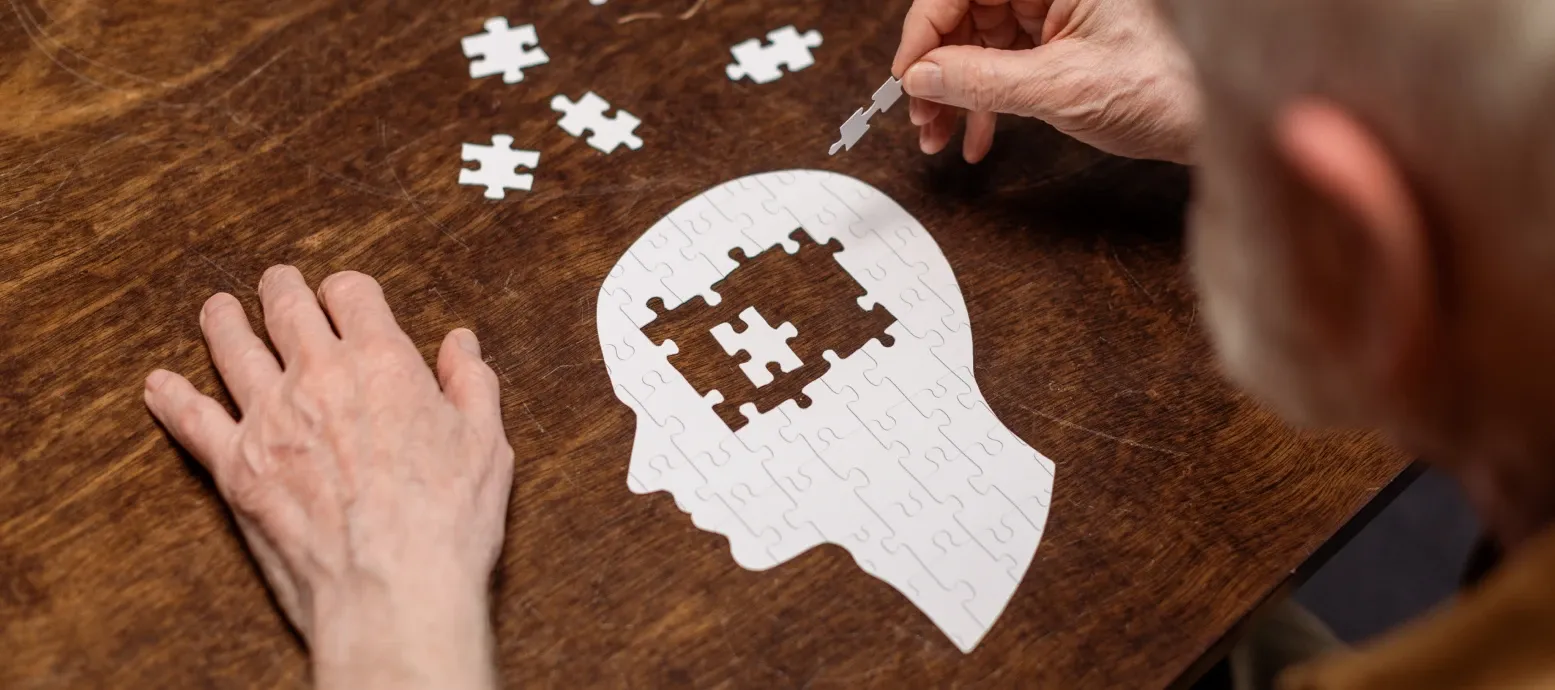
Jigsaw puzzles have been around for centuries and no, they’re not just for your grandma! In fact, jigsaw puzzles challenge both sides of your brain simultaneously. Your left hemisphere processes information logically and sequentially, whereas your right hemisphere is responsible for your creative and intuitive thought processes.
Solving jigsaw puzzles has been shown to be a great short-term memory game that is fun and relaxing at the same time. Puzzle solving is a fantastic technique to sharpen your mind, increase your processing speed, and boost your short-term memory. It’s also a great way to boost hand-eye coordination, requiring both your hands and your brain.
One of the most entertaining memory games you can play in your spare time is a word scramble. The goal is simple: you need to figure out the right word in a set of scrambled letters. This is great for people of all ages, but especially for children. Youngsters who practice their vocabulary and language skills by solving word scrambles benefit greatly.
It helps them to develop word recognition, learn to read context clues, and improve their spelling.
Playing word scramble games regularly can significantly improve your brain's ability to solve problems and can increase your attention span. By focusing on solving the word scramble, you’re using clues to solve the puzzle as well as strengthening your ability to focus. What better way to train your brain?
If you're looking for a relaxing pastime, you can’t go wrong with Mahjong. While the game might look simple on the surface, a well-planned strategy is essential for success.
Players of Mahjong must be able to memorize and strategize based on the symbols on each tile. This memorization of tiles and symbols is great for training your brain, but it also increases one's ability to recognize visual patterns.
In a study performed on adults and seniors, it was proven that playing Mahjong can improve short-term memory, increase attention spans and concentrations, and sharpen logical thinking skills. So challenge your friends and start playing free mahjong games today!
Backgammon is one of the most well-known two-player table games that combines strategy and chance to determine the winner. The game has survived for thousands of years, with its origins traced back to ancient Mesopotamia and Persia. Talk about a long history!
It takes a significant amount of brainpower, memory, and wit to succeed at most tabletop strategy board games. However, backgammon in particular is a great way to sharpen your mind because it requires a lot of strategic planning and quick problem-solving. Specifically, these activities help strengthen connections between the prefrontal cortex and the hippocampus. This aids in the formation of long-term memories and the ability to think on your feet.
We couldn’t make this list without talking about one of the most classic games out there: good old fashioned solitaire. Solitaire games can be played by anyone, regardless of age.
While this old school game might not seem very challenging, your brain is actually working hard to parse through that stockpile!
At its most basic, the benefits of playing solitaire for your memory start with memorizing the suits and colors of the deck. However, you also need to recall where you last saw a specific card or remember the grouping of cards. This allows you to plan out your next move in order, resulting in strategic and logical thinking. So next time you’re playing solitaire, remember that you’re not just killing time — you’re training your brain!
Puzzle games that have a matching format have seen considerable success for those looking to improve their memories. They offer a fun, simple and easy way to boost cognitive skills. Matching games can vary wildly, but nearly all of them boost your brain’s ability to recall because you must remember which tile is hiding a specific image.
Arkadium’s Memory Game is like most matching games, asking you to clear the board by matching tiles. Once you match the correct tiles, they’ll disappear. However, our game comes with a fun little brain boost. Every once in a while, you may be asked to match tiles of the same theme, instead of matching identical images. You can also get bonus points by matching star tiles to boost your score in this super additive memory game!
Our memories are some of our most precious belongings, and we have to work hard to keep them. Luckily, training your brain doesn’t have to feel like work. With Arkadium, you can access hundreds of free games online — no download necessary. So start flexing that brain muscle and get to gamin’ with Arkadium today!
Category: Brain Games

